My Internship: Part 4 – Internal Medicine
My final three month block of the first year of internship was Internal Medicine. If you’ve just stumbled upon this semi-regular update on my experience as a medical intern in South Africa, then welcome! You can find the reflections of my first three blocks at
Ok, let’s try start with an explanation of what internal medicine is. If you’re not a child, aren’t having a child and your condition is unlikely to be fixed by cutting you open, then you probably fall under internal medicine. There’s a fair amount of overlap with family medicine and even hospitals are a little confused as to which patients should be cared for by which department.

Cardiology (hearts), pulmonology (lungs), nephrology (kidneys), gastroenterology (digestive tract), endocrinology (hormones), hepatology (liver), rheumatology (connective tissue) and neurology (brain and nerves) are all subspecialities of internal medicine (completely random side note: the blog site highlighted all these specialties as misspelt and suggested demonology, necrology, and herpetology instead). In other countries, infectious diseases like HIV and TB fall under this category. Here in South Africa where it’s so endemic that it’s in the first few illnesses you consider when anyone shows up sick, it tends to fall into the family medicine category but some of the complicated cases still end up in internal, so you see how there may be some interdepartmental politics that occur. What this means practically is that there are a massive spectrum of conditions that one ends up seeing. Thankfully, there’s also a bunch of really, really smart doctors who aren’t me and are very good at managing these complex problems. The down side of working with lots of incredibly smart people is that it can make you feel incompetent while they discuss trials and studies of diseases that you barely know how to spell and definitely don’t know the metabolic pathway for.
Internal medicine is known for its endless ward rounds. Ward rounds are present in every department but Internal takes them to a new level. A ward round is essentially when everyone walks around the ward and discusses each patient. This allows everyone to know what is going on with all the other patients that they have not personally seen while getting senior input to ensure that each person is receiving the best care possible. The doctor who saw the patient that day will give a short history of what diseases the patient has (and sometimes that is a very long list), why they’ve come into hospital (often a complication of one of their many illnesses), what we’ve done for them so far, and what is the plan going forward. I’ve realised that ward rounds can look like a waste of time to patients but they really are valuable. Contrary to popular belief, doctors are not all hooked up to some magical artificial intelligence where what you’ve told the one doctor is automatically communicated to every other doctor. That would be convenient, but sadly we still use the old fashioned method of talking to each other (which means if you weren’t part of the conversation you have no clue what is going one).
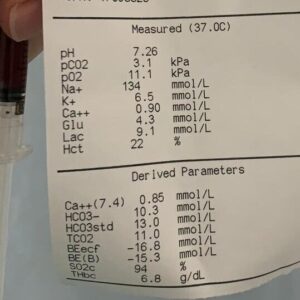
Rounds are also valuable for bettering patient care. A junior doctor may have seen and admitted the patient, started their initial work up in the ward but not considered all the weird and wonderful interactions of the parts of the body, the medications, and the options available. That being said, rounds can also be the bane of an intern’s existence. The consultants may be super interested in the debating the benefits and risks between two different anti-hypertensives (and don’t get me wrong, it is important), but all the intern can think about is the list of bloods to draw, tests to order, and discharges that still need to be done for the previous patients before the intern can go home. There’s some special kind of dread when it hits 4 o’clock, there’s still another room of patients to round on, the list of ward work is longer than the length of silence each time the consultant asks everyone a question, and the rumbles of one’s stomach is threatening to interrupt the ongoing monologue. Thankfully, on those days some of the work can only be done the next day anyway because all other departments have closed already. So, yes, ward rounds can sometimes be a little tiring.
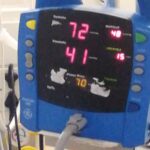
Resuses or resuscitations (if you have a better way to pluralise the shortened version please let me know), however, are one of the most emotionally taxing parts of medicine. This block had more than its share. I saw a temporary pacemaker being inserted before flying the patient to Cape Town for specialist care. Unfortunately the patient had a cardiac arrest while being loaded into the plane which meant the paramedics had to rush them back to our emergency center where we spent the next couple of hours trying (unsuccessfully) to get them stable again. One day in the ward the nursing staff found a patient unresponsive and started CPR. I was the only doctor in the ward at the time and had to lead the resus until some more experienced people arrived. Another patient arrested while getting a CT scan. A teenager passed away while awaiting transport to go home. Sometimes there’s answers to what caused the death, sometimes there’s no answer (just the most likely reason).
The patient who needed to fly to Cape Town had had multiple previous heart attacks and the last one resulted in a bradycardia. The patient in the ward was not part of my department. I didn’t know her story until afterwards. The CT scan would have given us an answer to the patient’s decreased level of consciousness and strange neurology but the timing of the arrest meant we could not give a definitive answer to the family about the cause. After all the lab results came out we found out that the young teenager had a phaeochromocytoma. It likely ruptured. He had been discharged to go home to await the various test results before following up with some super-specialists. The answers came too late. The early warning signs from some years prior had been ignored.

As part of this block, the internal medicine intern spent rather a large amount of time in the emergency department. If there wasn’t department specific work to be done then we were expected to join the doctors working in EC to see patients and attempt to reduce the wait time. I’ve managed to confirm something I’ve always known; South Africans cannot handle their alcohol. The amount of drunk, stabbed people who come into EC over the weekends is quite astounding. The number of drunk drivers brought in by the police is concerning. The influx of patients coming in the next day after awaking from their hangover and finding there’s a problem is rather sad. It’s also shown me how little the average person knows about their body and disease processes (but I’m currently just over two months into doing family medicine at a district level hospital and I’ll definitely have to expound on this in a future reflection).
So in this block, I learnt a lot, got to do some very cool procedures, and will definitely be a better doctor for having gone through the experience. It’s the dream job for some people; I’m not one of them.

Awesome post. Well done on giving such a great insight into your work